Live in 5–7 Days: Website Subscription Model for UK Small Businesses
Yes, if you’re a small business, sole trader or event organiser who needs a site live fast without a big upfront bill. A website subscription model rolls the build, hosting, updates and support into one monthly fee, usually with a modest setup charge. Several providers offer exactly this type of service from a modest setup fee, and industry pricing guides confirm it’s now standard practice, provided you check who owns the site at the end.
TL;DR:
- The monthly fee typically covers UK hosting, SSL, backups, security, and ongoing updates, including basic SEO and AI search optimization.
- Costs vary from about £20 per month plus a small setup fee for simple sites to higher amounts for more complex features or larger projects, but ownership transfer depends on the provider.
- Most plans run a minimum initial term of 12 months with the site usually becoming fully owned by the client afterward, and cancellations often result in site suspension or removal.
- Evaluate the provider’s backing on backups, content export, SEO deliverables, site speed, and domain handling before committing, and ask about ownership rights and migration support.
- Small business and sole trader sites can go live within 5 to 7 days, making this model ideal for quick deployment without large upfront costs.
Table of Contents
- What does a pay monthly website plan actually include?
- What does a website subscription model typically cost?
- Contract terms, ownership and cancellation: what to check
- Who should choose a website subscription model?
- How do you evaluate a website subscription plan before signing?
- BasicBS as a working example of the checklist in action
- Why the “cheap website” conversation misses the point
- Ready to get your site live this week?
- Sources
- FAQ
What does a pay monthly website plan actually include?
Strip away the sales jargon and a decent subscription plan covers the same fundamentals every time: managed UK hosting, an SSL certificate, regular backups, security patches and someone watching uptime so you’re not the one refreshing the page at midnight wondering why it’s down.
Beyond the basics, most providers bundle ongoing maintenance into the price. That means CMS updates, small content tweaks (swapping a phone number or adding a new service) and a monthly allowance for edits without extra invoices landing in your inbox.
A proper plan also has some SEO and AI search optimisation baked in, not bolted on as an afterthought:
- On-page SEO and basic keyword research for your trade or event
- Google Search Console and GA4 setup so you can actually see who’s visiting
- AI search optimisation for local business, helping your site surface in tools like ChatGPT and Google’s AI Overviews
- Optional add-ons: ecommerce, booking forms, chatbots, domain transfer, or a bespoke one-page event site
What does a website subscription model typically cost?
Here’s where the water gets muddy, because “pay monthly” hides two very different billing structures. Some providers spread the entire build cost across monthly instalments so you own the site once the contract ends. Others charge a small setup fee plus an ongoing hosting and support charge, which is closer to renting.
For context, template and productised packages in the UK typically run £300 to £1,500 as a one-off, freelancer builds sit around £1,500 to £3,500, and full agency brochure sites commonly hit £3,000 to £8,000. That’s a lot of cash to find before you’ve sold a single job.
Cost snapshot: Peak SEO notes that many pay-monthly services use a small upfront fee plus monthly payments, with SEO foundations included from day one, and site ownership often transferring to the client once the initial term ends.
A sole trader running a one-page event site might pay a modest setup fee plus a low monthly charge. A small trades business wanting a full site with quote forms and SEO will sit a little higher, but still nowhere near an agency invoice. Rolling plans that kick in after your first year often carry loyalty discounts, which reward you for staying rather than punishing you for it.
Contract terms, ownership and cancellation: what to check
Before you sign anything, get clear answers on these:
- Minimum term and notice period. Most subscription plans run an initial 12 months, then switch to a rolling, cancel-anytime arrangement.
- Who owns the site. Some providers transfer full ownership once the term ends; others keep it as a managed rental unless you request migration.
- What happens if you stop paying. Ask directly whether the site goes offline immediately or whether there’s a grace period.
- Your exit plan. Confirm the provider will hand over hosting credentials, domain access and a full content export if you leave.
This is genuinely the bit most people skip, and it’s the bit that bites hardest later.
Who should choose a website subscription model?
A subscription plan suits people who need to be trading, not tinkering with a website for six weeks. That covers a lot of ground:
- Electricians, plumbers and joiners who want a mobile friendly quote page for trades and nothing more complicated
- Sole traders needing a simple, professional presence without a five-figure invoice
- Event organisers wanting a password-protected one-page site for a wedding or baby shower, live in days rather than weeks
- Anyone comparing a landing page for Checkatrade alternative options who want their own site instead of renting space on someone else’s platform
Where it makes less sense is complex ecommerce with hundreds of SKUs, large membership portals, or heavily bespoke systems needing custom development. Those projects need dedicated build time that a standard monthly plan isn’t built for. For most trades and sole traders, though, speed to market and low upfront cost win every time.
How do you evaluate a website subscription plan before signing?
Work through this before you commit to anything:
- Ownership – will the site be yours outright, and when?
- Backups and export – can you get your content out in a usable format?
- Update allowance – how many changes per month, and what counts as “extra”?
- Uptime and support – is there a stated response time if the site goes down?
- Speed and mobile performance – has the provider actually tested load times?
- SEO inclusion – is it a proper setup or a vague “SEO friendly” claim?
- Domain handling – do they register it, transfer it, or does it stay with you?
- Cancellation policy – what’s the notice period once you’re off the initial term?
Ask providers directly: “What happens to my domain if I leave?” and “Can you show me an example of the SEO work you’ve actually delivered?” Vague answers, locked-in hosting you can’t move, or “we’ll sort it when the time comes” responses are red flags. For trades specifically, prioritise a fast, mobile-friendly quote page over a sprawling multi-page brochure site nobody reads on a building site with patchy signal.
Pro Tip: Don’t take “we do SEO” at face value. Ask for the specific deliverables: keyword research documents, a Search Console screenshot, or a named example of local business schema setup UK they’ve implemented for another client.
BasicBS as a working example of the checklist in action
BasicBS builds its pay monthly websites around exactly this checklist, which is worth knowing whether you use us or not. Sites go live in 5 to 7 working days, with managed UK hosting and SSL included as standard, not an upsell.
Here’s how the claims map to what you should be checking:
- Ownership and migration – setup fee and monthly plans available, moving to a rolling, cancel-anytime plan after an initial term
- Loyalty over penalty – loyalty discounts on rolling plans, rewarding clients who stay rather than hiking prices on renewal
- SEO and AI readiness – SEO and AI search training integrated into builds, addressing how to get your business on ChatGPT search from the start
- Update allowance – monthly updates included, not charged as separate call-outs
Why the “cheap website” conversation misses the point
Most guides to website subscription models focus obsessively on price and skim past the one thing that actually determines whether the site works: what happens after launch. A £20-a-month site that nobody maintains, that loads slowly on a builder’s phone at 7am on site, or that vanishes the moment you miss a payment isn’t cheap. It’s expensive in the ways that don’t show up on an invoice.
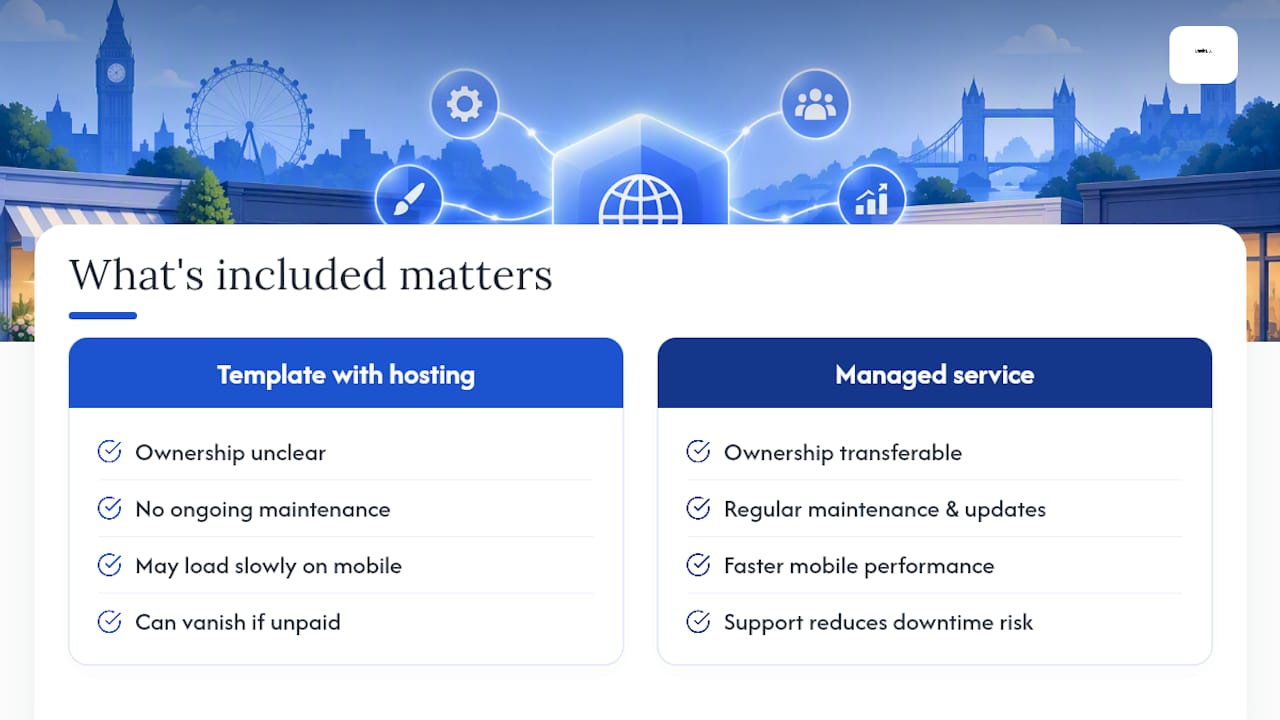
The conventional advice tells you to compare monthly figures side by side. That’s backwards. Compare what’s included first, because two “£25 a month” plans can mean wildly different things once you strip away the marketing. One might mean a template with hosting bolted on. The other might mean genuine managed hosting, updates and support built around keeping your site working, not just live.
If you take one thing from this guide, make it this: ask about ownership and migration before you ask about price. Everything else, the SEO, the design, the monthly allowance, only matters if you’re not trapped when you want to leave.
— Rhys
Ready to get your site live this week?
This provider offers an alternative to traditional agency retainers for small businesses and sole traders who want a working website, fast. There is typically no prolonged discovery workshop or lengthy lock-in beyond an initial term. Setup fees and monthly plans are competitively priced, and sites often go live within a week with managed UK hosting, SSL and AI search optimisation included from the start.
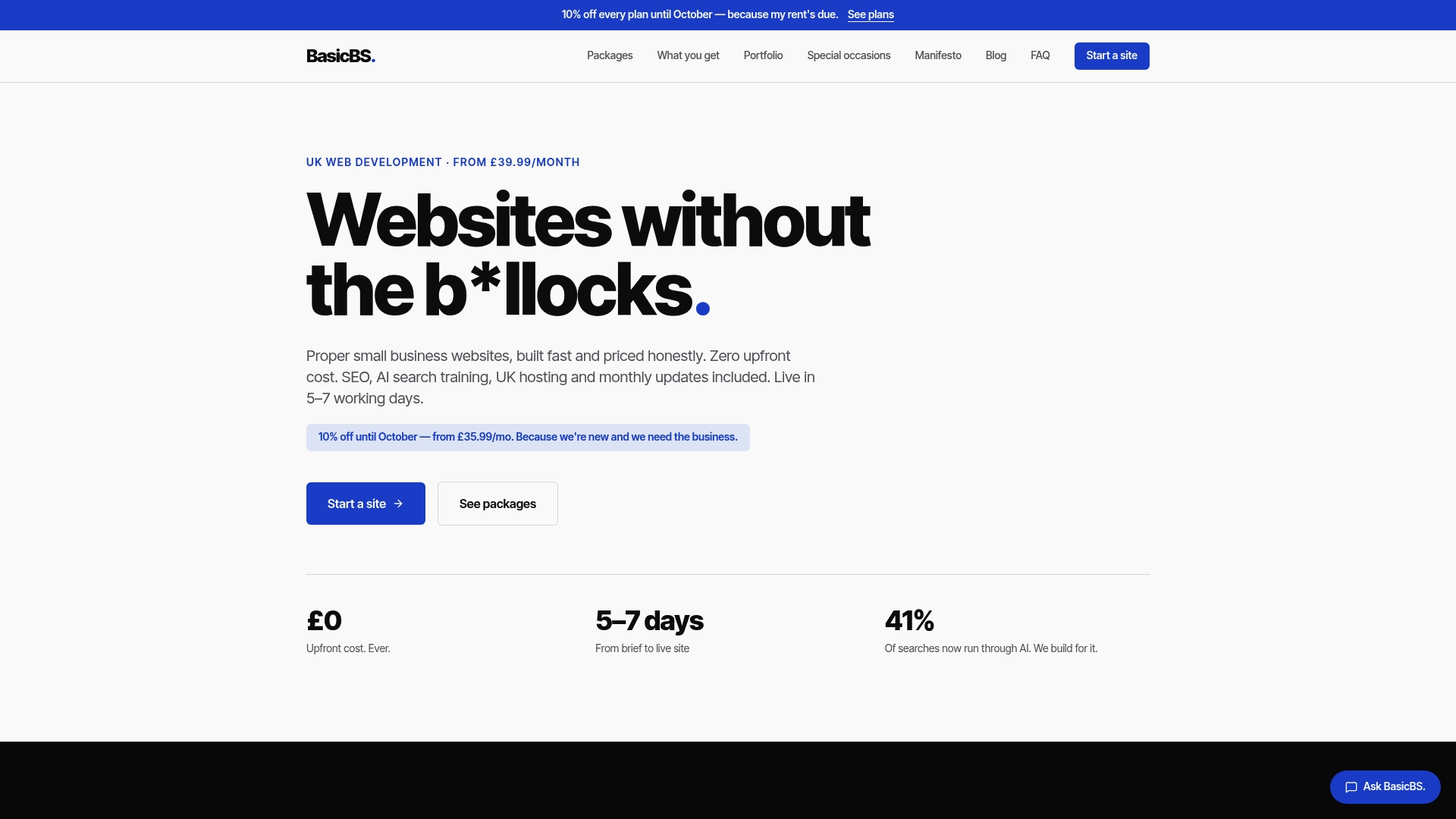
Three things to do next: compare what you’re being quoted against the checklist above, browse real examples of finished sites to see the standard, and then request a quote through our website packages page. If you want the full detail on what’s included before you commit, our services page breaks it down properly, no jargon, no small print games.
Sources
- Website Design Packages (UK) | What’s Included & What’s Not
- Pay Monthly Web Design for Small Businesses | Peak SEO
FAQ
What is a website subscription model?
A website subscription model is a pay monthly website design arrangement where you pay a recurring fee covering the build, hosting, updates and support, rather than one large upfront invoice. Most UK providers, including BasicBS, charge a small setup fee alongside the monthly plan.
Do I own my website with a subscription plan?
It depends on the provider’s model: some transfer full ownership once your initial term ends, while others keep it as a managed subscription unless you request migration. Always confirm this in writing before signing, as ownership terms vary significantly between providers.
What happens if I stop paying my website subscription?
Most providers will suspend or remove the site if payments stop, since the monthly fee covers hosting and maintenance directly. Ask upfront what grace period applies and whether you’ll get your content and domain back if you decide to leave.
How much does a pay monthly website cost in the UK?
BasicBS lists a one-off setup fee from £100 and monthly plans from £20, moving to a rolling, cancel-anytime plan with a 35% loyalty discount after 12 months. Other UK providers typically charge similar small upfront fees paired with ongoing monthly hosting and support charges.
How long does it take to launch a subscription website?
BasicBS states that sites go live within 5 to 7 working days of the build starting, which is considerably faster than most agency timelines. This suits sole traders and event organisers who need a working site quickly rather than in six to eight weeks.